
Historically, sanitary fluid equipment has primarily served industries with stringent requirements for microbial control and cleanliness, such as food, beverage, and pharmaceuticals. In recent years, the fine chemical industry has faced an increasingly urgent need for fluid handling solutions that ensure high purity, prevent cross-contamination, and offer corrosion resistance; consequently, sanitary fluid equipment is rapidly making inroads into this sector. Kunshan Xinlai Clean's high-pressure PTFE seat valves are already employed in sectors with rigorous fluid control demands, such as consumer fine chemicals, while sanitary diaphragm valves find widespread application in pigment separation, CIP systems, purified water systems, cosmetics, fermentation processes, and fine chemical production. Similarly, sanitary centrifugal pumps—designed as core equipment for aseptic fluid transfer in hygiene-critical fields like pharmaceuticals, biopharmaceuticals, and fine chemicals—are manufactured in strict compliance with international sanitary standards, including GMP, FDA, 3-A, EHEDG, and ASME BPE.
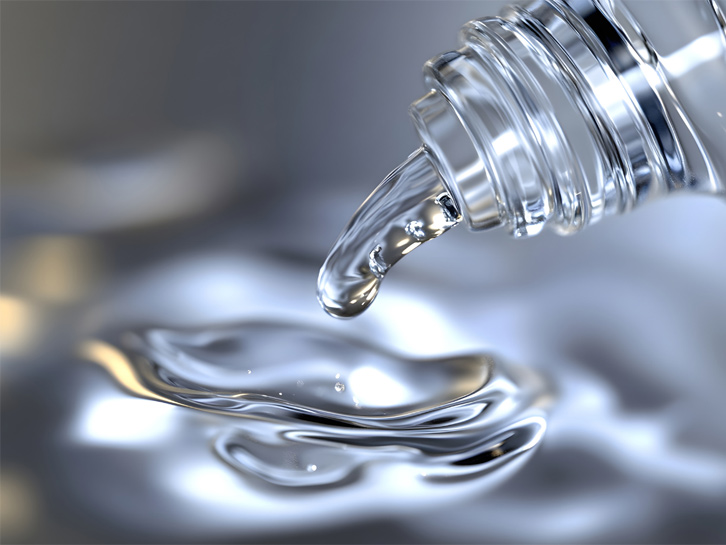
Fine chemical production involves a wide variety of materials with vastly different physicochemical properties, necessitating diverse requirements for sanitary fluid handling equipment. A detailed analysis follows, based on the characteristics of various typical materials.

Selecting materials for sanitary fluid equipment in fine chemical processing requires a comprehensive assessment of medium corrosivity, cleanliness requirements, and cost factors. 316L stainless steel is the most widely used base material, while seal materials—such as EPDM, FKM, FFKM, or PTFE—are selected based on specific operating conditions. Regarding surface roughness, standard applications typically require Ra ≤ 0.8 μm; however, applications involving high-purity chemicals and electronic-grade materials necessitate electropolishing to achieve Ra ≤ 0.4 μm, thereby removing microscopic burrs and enhancing the density of the passivation layer.
Equipment design must eliminate dead legs, blind pipes, and areas where fluid can pool. System designs should avoid creating dead zones; where they are unavoidable, blind pipes must adhere to the L/d ≤ 3 ratio. Fluid pathways should feature smooth, continuous transitions to ensure complete gravity-based drainage, and installation methods should facilitate natural drainage.
CIP (Clean-in-Place) and SIP (Sterilize-in-Place) capabilities are core features of sanitary fluid equipment. In fine chemical manufacturing, the need to switch between multiple product types demands equipment capable of rapid and thorough cleaning. Integrated multi-channel diaphragm valves—which combine multiple valve chambers into a single unit—eliminate the need for extra piping and fittings; this reduces the number of weld seams and eliminates dead legs, making them ideal for multi-product shared-line production. Similarly, the design of sanitary centrifugal pumps—featuring no cleaning dead zones or residual media—ensures reliable CIP/SIP performance.
View our recommended sanitary fluid equipment or contact us directly for expert advice.





We use cookies to collect information about how you use this site. We use this information to make the website work as well as possible and improve our services.more details